Marylebone London: How to Say It, Things to Do, Shops, Food and Hidden Gems
Marylebone is the calm, village like neighbourhood just north of Oxford Street. Here is how to say it, what to see, where to shop and eat, and how to get there.
In this guide
- Marylebone at a glance
- How do Londoners pronounce Marylebone?
- Is Marylebone a good part of London?
- Things to do in Marylebone
- Marylebone things to do: quick list
- Shopping in Marylebone
- Where to eat in Marylebone
- Getting to Marylebone
- Marylebone history and famous residents
- What is London’s best kept secret?
- A walk through Marylebone
- Marylebone at Christmas
- Tips for visiting Marylebone
- Visit TALES House in Marylebone
- Frequently asked questions
- Plan the rest of your trip
Marylebone is the elegant, village like neighbourhood just north of Oxford Street, known for its independent shops, Georgian streets and some of the best food in central London. It stretches from Oxford Street up to Regent’s Park, and from Edgware Road across to Portland Place. Within its streets you will find Marylebone High Street, the free Wallace Collection, Madame Tussauds, the Sherlock Holmes Museum on Baker Street and a Sunday farmers’ market. TALES House on Cavendish Square sits in the south eastern corner of Marylebone, two minutes from Oxford Circus. This guide covers how to say the name, what to see, where to shop and eat, how to get around, and whether Marylebone is a good base for your trip.
Marylebone at a glance
| What | Details |
|---|---|
| Where | Central London, north of Oxford Street and south of Regent’s Park |
| How to say it | MAR lee bun, or MAR luh bun (Londoners rarely say Mary le bone) |
| Best known for | Marylebone High Street, independent shops, food, Georgian architecture |
| Free things to do | Wallace Collection, Regent’s Park, TALES House, window shopping |
| Main stations | Baker Street, Bond Street, Marylebone, Regent’s Park, Oxford Circus |
| Sunday market | Marylebone Farmers’ Market, every Sunday 10am to 2pm |
| Free stop on Cavendish Square | TALES House, 28 Cavendish Square, open daily 11am to 8pm |
| Feel | Calm, smart and walkable, minutes from the Oxford Street crowds |
How do Londoners pronounce Marylebone?
This is one of the first questions visitors ask, and for good reason. Most Londoners say MAR lee bun or MAR luh bun, with the stress on the first syllable and the ending squashed into a short “bun”. You will also hear “MARLY bone”. What you rarely hear from locals is the full “Mary le bone”, which is how most people read it the first time.
The name comes from a church. In the Middle Ages, a parish church dedicated to St Mary stood by a small river called the Tyburn, or “bourne”, which means stream. The area became known as St Mary at the bourne, which over time became St Marylebone, and then simply Marylebone. The Tyburn still flows underground, and Marylebone Lane, with its unusual winding shape, is said to follow the old course of the stream.
What is the most mispronounced place in the UK?
There is no official ranking, but Marylebone is always near the top of the list for visitors. Other London names that regularly catch people out include Leicester Square (LESTER), Southwark (SUTH uk), Holborn (HO bun) and Greenwich (GREN itch). Further afield, Worcester (WUSS ter), Gloucester (GLOSS ter) and Loughborough (LUFF bruh) are famous for tripping people up.
Is Marylebone a good part of London?
Yes. Marylebone is one of the most pleasant parts of central London for visitors. It is safe, walkable and much calmer than the West End streets just to the south, yet you can walk to Oxford Street, Regent Street and Soho in minutes. Its streets are lined with handsome Georgian terraces and red brick mansion blocks, and much of the area is looked after by two big historic estates, which helps explain why the shops and restaurants feel so carefully chosen.
It works well as a base for a London trip, especially if you plan to shop and eat well. The trade off is price: hotels and restaurants in Marylebone are on the expensive side. If you are staying elsewhere, it is still well worth half a day, or a whole day if you include the Wallace Collection and Regent’s Park.
Things to do in Marylebone
Marylebone High Street
The heart of the neighbourhood is Marylebone High Street, a gently curving street of independent boutiques, homeware shops, cafes and well known British brands. It has a village feel quite unlike Oxford Street, just ten minutes’ walk away. Side streets such as Moxon Street, Paddington Street and Marylebone Lane are worth exploring too, with specialist food shops, small galleries and cosy pubs.
Daunt Books
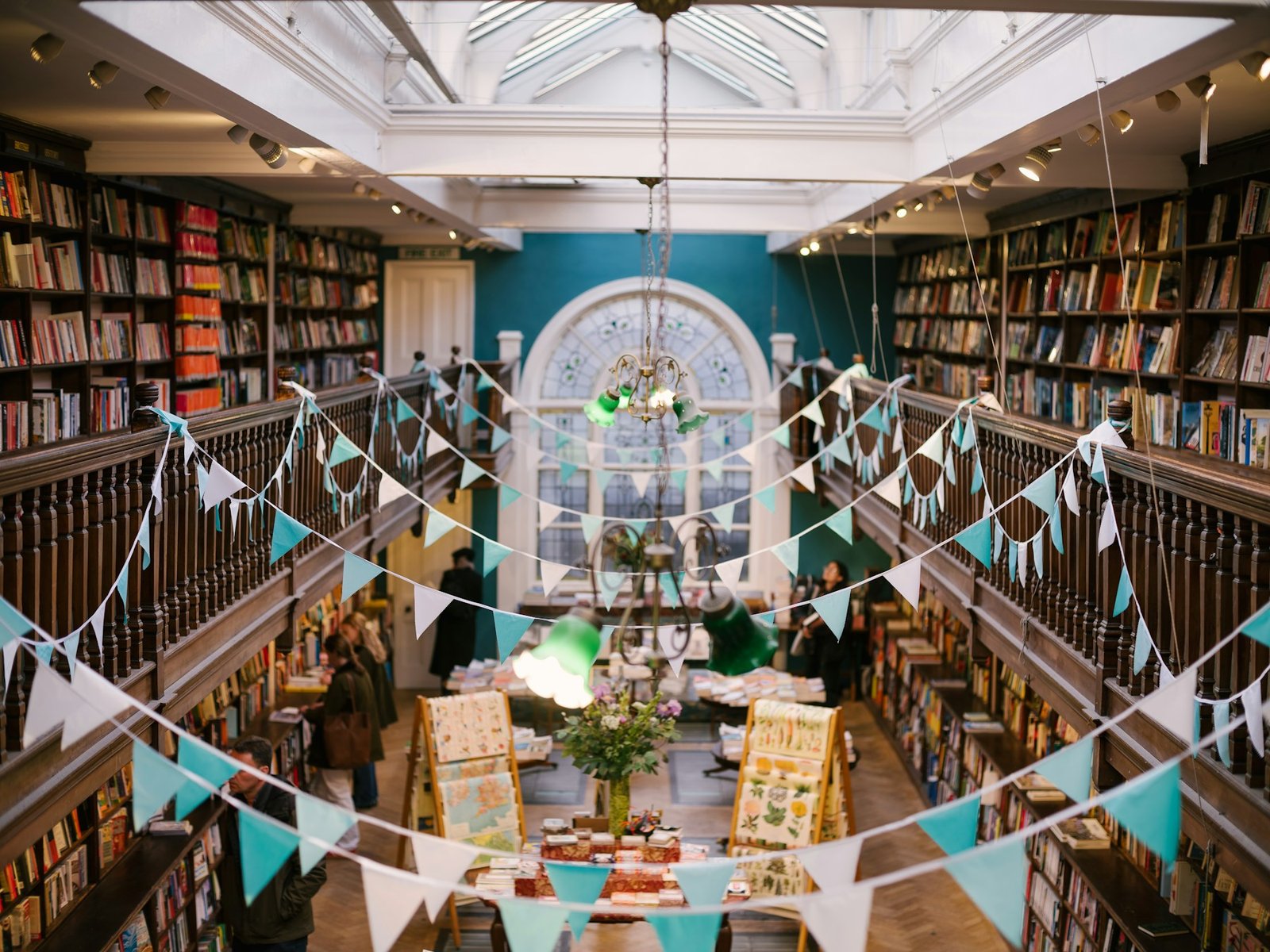
Daunt Books at the top of Marylebone High Street is one of London’s most beautiful bookshops. Its long Edwardian interior has oak galleries, green walls and a tall stained glass window at the far end. Travel books are arranged by country, so you can browse guides, novels and history for one destination side by side. It is free to look around and a lovely place to pick up a souvenir with a difference.
The Wallace Collection
The Wallace Collection in Hertford House on Manchester Square is one of London’s great free museums. Inside a grand townhouse you will find old master paintings, French furniture, porcelain and one of the finest collections of arms and armour in the country. It is open daily from 10am to 5pm, and entry to the permanent collection is free. Its glass roofed courtyard restaurant is a peaceful spot for lunch or afternoon tea. Many Londoners would call the Wallace Collection the best kept secret in the city.
Madame Tussauds
The famous waxwork museum on Marylebone Road is one of London’s most visited attractions. It is ticketed, and queues can be long in school holidays, so book online in advance and aim for an early slot.
The Sherlock Holmes Museum
Fans of the great detective head to Baker Street, where Arthur Conan Doyle placed Holmes’s home at 221b. The Sherlock Holmes Museum recreates his Victorian rooms and displays scenes from the stories. Expect a queue outside the door at busy times. Baker Street station itself has Sherlock themed tiles on some platforms, and there is a statue of Holmes outside.
Regent’s Park
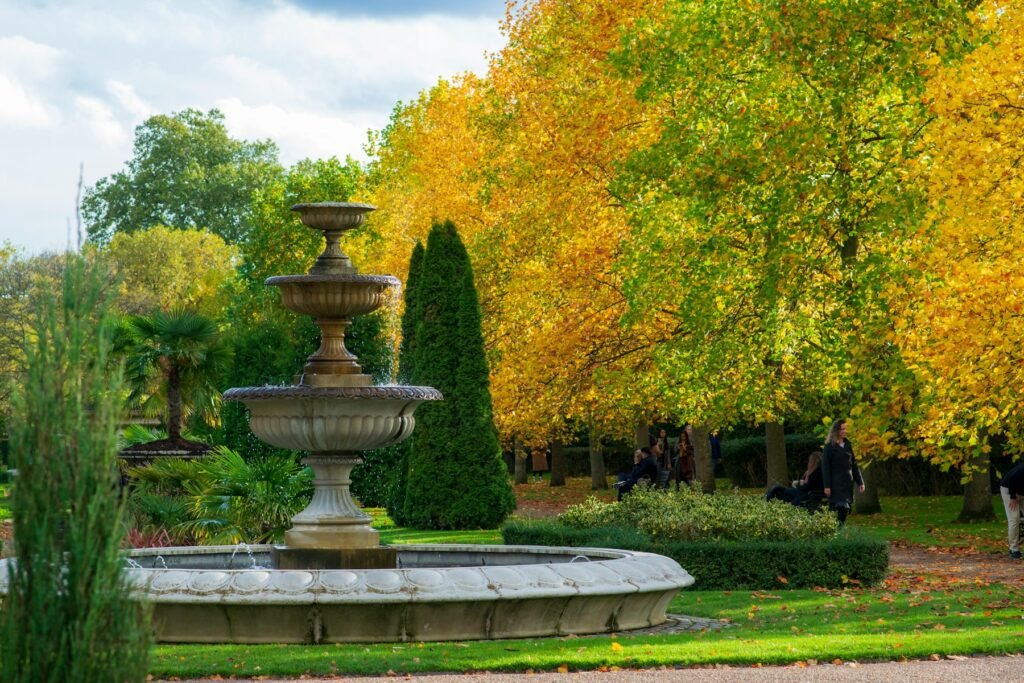
On Marylebone’s northern edge is Regent’s Park, one of London’s royal parks. Highlights include Queen Mary’s Gardens, home to a famous rose garden that blooms in early summer, the boating lake, wide lawns for picnics, and the Open Air Theatre, which stages plays in the warmer months. London Zoo is at the northern end of the park.
Marylebone Farmers’ Market
Every Sunday from 10am to 2pm, Marylebone Farmers’ Market fills St Vincent Street, Aybrook Street and the top of Moxon Street with stalls from farms and producers around the south of England. It has run since 2003 and is a favourite with locals for meat, cheese, vegetables, bread and hot food. Bring your own bag.
Wigmore Hall
Wigmore Hall on Wigmore Street is one of the world’s most celebrated venues for chamber music and song, with an intimate hall famous for its acoustics. Check the programme for lunchtime concerts, which are an affordable way to experience it.
Cavendish Square and TALES House
At the south eastern corner of Marylebone, right behind John Lewis, is Cavendish Square, a leafy garden square laid out in the eighteenth century. On its north side, at number 28, is TALES House, a shop and event space for independent African brands, with fashion, accessories, beauty, homeware and gifts. It is free to walk in, open daily from 11am to 8pm, and this season it hosts a Christmas market until 23 December, with its own Christmas lights switched on on 22 November 2026.
More to discover
- St Christopher’s Place, a hidden lane of restaurants and boutiques opening off Oxford Street opposite Bond Street station.
- St Marylebone Parish Church on Marylebone Road, the parish church that gave the area its name.
- Harley Street and Wimpole Street, famous for their doctors’ practices and fine Georgian houses.
- Portland Place, a grand avenue leading to BBC Broadcasting House.
- The Twist Museum, Frameless and Moco Museum, three newer attractions near Oxford Street and Marble Arch, all popular on rainy days.
Marylebone things to do: quick list
| Place | Why go | Cost |
|---|---|---|
| Marylebone High Street | Independent shops and cafes in a village setting | Free to browse |
| Daunt Books | One of London’s most beautiful bookshops | Free to browse |
| Wallace Collection | Old masters, armour and a grand townhouse | Free |
| TALES House, Cavendish Square | Independent African brands and a Christmas market | Free entry |
| Regent’s Park | Rose gardens, boating lake and lawns | Free |
| Marylebone Farmers’ Market | Sunday food market | Free entry |
| Madame Tussauds | Famous waxworks | Ticketed |
| Sherlock Holmes Museum | Holmes’s rooms at 221b Baker Street | Ticketed |
| Wigmore Hall | World class chamber music | Ticketed |
Shopping in Marylebone
Marylebone is the antidote to the big chains of Oxford Street. On and around Marylebone High Street you will find independent fashion boutiques, Scandinavian and British homeware shops, perfumers, stationers, cheese shops and delis. Moxon Street is a highlight for food lovers, with specialist cheese and butchers’ shops, while Marylebone Lane has small cafes and a famous family run deli.
For something completely different, TALES House on Cavendish Square brings together independent African designers and makers in one space, from fashion and jewellery to beauty, homeware and gifts. And because Marylebone’s southern boundary is Oxford Street itself, the big department stores are never far away: Selfridges, John Lewis and Marks and Spencer are all on the edge of the neighbourhood. See our guide to Oxford Street for the full picture.
Where to eat in Marylebone
Marylebone has one of the best food scenes in London, from relaxed cafes to famous restaurants. A few areas to start with:
- Marylebone High Street for cafes, bakeries and brunch spots.
- Moxon Street and the farmers’ market for picnic supplies and Sunday street food.
- Marylebone Lane for traditional cafes and a historic deli.
- St Christopher’s Place for a lane of restaurants with outdoor terraces.
- Seymour Place and Chiltern Street for smart neighbourhood restaurants and the famous Chiltern Firehouse hotel.
- The Wallace Collection courtyard for a calm lunch or afternoon tea.
Book ahead for dinner, especially in December and at weekends.
Getting to Marylebone
Marylebone is well served by the Tube and is an easy walk from Oxford Street.
- Baker Street (Bakerloo, Circle, Hammersmith and City, Jubilee and Metropolitan lines) for Sherlock Holmes, Madame Tussauds and the top of Marylebone High Street.
- Bond Street (Central, Jubilee and Elizabeth lines) for St Christopher’s Place, the Wallace Collection and the southern end of the High Street.
- Oxford Circus (Bakerloo, Central and Victoria lines) for Cavendish Square, TALES House and the eastern side. See our Oxford Circus guide.
- Regent’s Park and Great Portland Street for the park and the north east of the area.
- Marylebone station (Bakerloo line and Chiltern Railways trains to places such as Oxford and Birmingham) on the northern edge.
Does the Elizabeth line go to Marylebone?
Not to Marylebone station itself. Marylebone station is served by the Bakerloo line and Chiltern Railways trains only. However, the Elizabeth line does serve the area: Bond Street station, on Oxford Street at the southern edge of Marylebone, is on the Elizabeth line, and from there it is about a ten minute walk to Marylebone High Street. Paddington, a short ride away, is also on the Elizabeth line. If you are arriving from Heathrow, the Elizabeth line to Bond Street is the easiest way into Marylebone.
Marylebone history and famous residents
Marylebone began as a small village on the Tyburn stream, surrounded by fields. In the eighteenth century the great landowners of the area laid out the elegant squares and streets you see today, including Cavendish Square, Portman Square and Manchester Square. By Georgian times it had become a fashionable place to live.
Which famous people lived in Marylebone?
Marylebone has long attracted writers, musicians and artists. A few of the best known names from its history:
- Charles Dickens lived at Devonshire Terrace, near the top of Marylebone High Street, where he wrote A Christmas Carol in 1843.
- Elizabeth Barrett lived at 50 Wimpole Street, where her famous courtship with the poet Robert Browning began.
- The Beatles have strong links to the area. Paul McCartney lived on Wimpole Street in the mid 1960s, and the band opened their short lived Apple boutique on Baker Street in 1967.
- Sherlock Holmes, though fictional, is Marylebone’s most famous resident of all, at 221b Baker Street.
Marylebone also gave its name to the Marylebone Cricket Club, the MCC, founded in 1787. The club now plays at Lord’s, just north of Regent’s Park, but its name still carries the neighbourhood around the world.
What is London’s best kept secret?
Everyone has their own answer, but Marylebone is full of contenders. The Wallace Collection, with its world class art in a grand townhouse and free entry, is often named. So is Daunt Books, with its galleried Edwardian shop floor. And just a few steps from the Oxford Street crowds, Cavendish Square and TALES House are a calm surprise: a garden square and a free space full of independent African brands that many visitors walk right past.
A walk through Marylebone
This easy route links the highlights and takes about two hours with stops.
- Start at TALES House, 28 Cavendish Square, two minutes from Oxford Circus. Browse the independent brands and, in season, the Christmas market.
- Walk west along Wigmore Street, passing Wigmore Hall.
- Turn north into Marylebone Lane and follow its winding course, the old path of the Tyburn.
- Join Marylebone High Street and wander north past the boutiques and cafes to Daunt Books.
- Head west to Manchester Square for the Wallace Collection.
- Walk up to Baker Street for the Sherlock Holmes Museum, then on to Regent’s Park.
- Finish in Regent’s Park with a walk through Queen Mary’s Gardens.
On a Sunday, start the route at the farmers’ market instead and finish at TALES House for a quiet browse.
Marylebone at Christmas
Marylebone is lovely in December. Marylebone High Street and the surrounding streets are decorated with lights, the shops fill with gifts, and the area is much calmer than Oxford Street for Christmas shopping. TALES House on Cavendish Square switched on its own Christmas lights on 22 November 2026 and runs a Christmas market daily from 11am to 8pm until 23 December. Just around the corner, Oxford Street’s first ever Christmas tree stands outside John Lewis.
For more ideas see our guides to Christmas in London, the Oxford Street Christmas lights and London Christmas lights.
Tips for visiting Marylebone
- Come on a weekday or Sunday morning for the calmest shopping, and the farmers’ market on Sundays.
- Combine it with Oxford Street. The two are side by side, so you can shop the chains in the morning and the independents in the afternoon.
- Wear comfortable shoes. Marylebone is best explored on foot.
- Book restaurants ahead, especially for dinner and weekend brunch.
- Check opening times on Sundays, when some independent shops open later or close earlier.
Visit TALES House in Marylebone
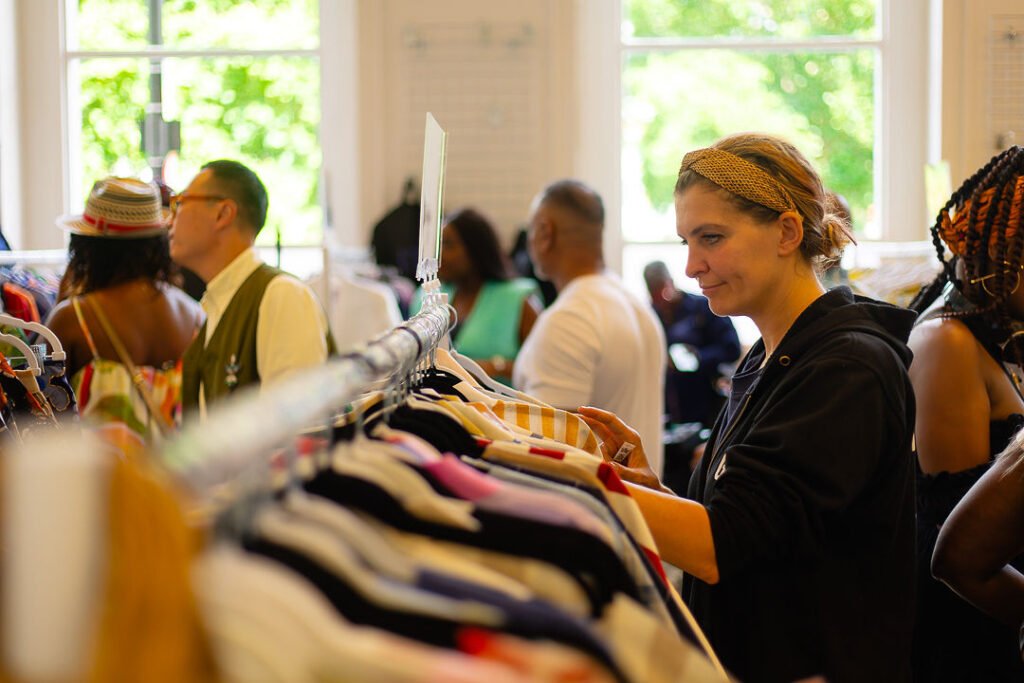
TALES House is at 28 Cavendish Square, in the south eastern corner of Marylebone, two minutes’ walk from Oxford Circus and right behind John Lewis. It is a shop and event space for independent African brands, with fashion, accessories, beauty, homeware and gifts you won’t find on the high street. It is open daily from 11am to 8pm, and this season it hosts a Christmas market until 23 December.
Entry is always free, so you can simply walk in. If you also book a free VIP pass, it arrives by email with a QR code: show it at the door and spin the prize wheel for a gift.

Frequently asked questions
Is Marylebone a good part of London?
Yes. Marylebone is safe, central and walkable, with excellent shops and restaurants, Georgian streets and easy access to Oxford Street and Regent’s Park. It is one of the most pleasant areas for visitors, though hotels and restaurants can be expensive.
Does the Elizabeth line go to Marylebone?
The Elizabeth line does not stop at Marylebone station, which is served by the Bakerloo line and Chiltern Railways. The nearest Elizabeth line station is Bond Street, on the southern edge of Marylebone, about ten minutes’ walk from Marylebone High Street.
What is London’s best kept secret?
Many Londoners would name the Wallace Collection in Marylebone, a free museum of world class art in a grand townhouse. Daunt Books and the quiet garden squares, including Cavendish Square with TALES House, are other favourites.
How do Londoners pronounce Marylebone?
Most Londoners say MAR lee bun or MAR luh bun, with the stress on the first syllable. You will also hear MARLY bone.
What is the most mispronounced place in the UK?
There is no official ranking, but Marylebone, Leicester, Southwark, Holborn, Worcester, Gloucester and Loughborough are all famous for catching people out.
Which famous people live in Marylebone?
Marylebone’s famous residents through history include Charles Dickens, who wrote A Christmas Carol there, the poet Elizabeth Barrett on Wimpole Street, and Paul McCartney in the 1960s. Its most famous address belongs to the fictional Sherlock Holmes at 221b Baker Street.
What is Marylebone known for?
Marylebone is known for Marylebone High Street and its independent shops, its restaurants and food shops, Georgian architecture, the Wallace Collection, Madame Tussauds, the Sherlock Holmes Museum and Regent’s Park.
Is Marylebone close to Oxford Street?
Yes. Oxford Street forms Marylebone’s southern boundary. Marylebone High Street is about ten minutes’ walk from Bond Street or Oxford Circus, and Cavendish Square is just two minutes from Oxford Circus.
Plan the rest of your trip
- Oxford Street London 2026: the complete visitor guide
- Oxford Circus: tube lines, exits and what is nearby
- Oxford Street opening hours 2026
- Christmas in London 2026: 25 things to do
- The TALES House Christmas market
Walk in any day, as entry is always free, or book a free VIP pass to spin the prize wheel. We’ll see you at 28 Cavendish Square.
About TALES House
TALES House London is a shop and event space for independent African brands, free to visit, at 28 Cavendish Square, just off Oxford Street, established by Bellafricana. We write these guides to help visitors make the most of the West End. Details such as dates and times can change, so check official sources before you travel.